South Africa National Cricket Team Vs Pakistan National Cricket Team Timeline
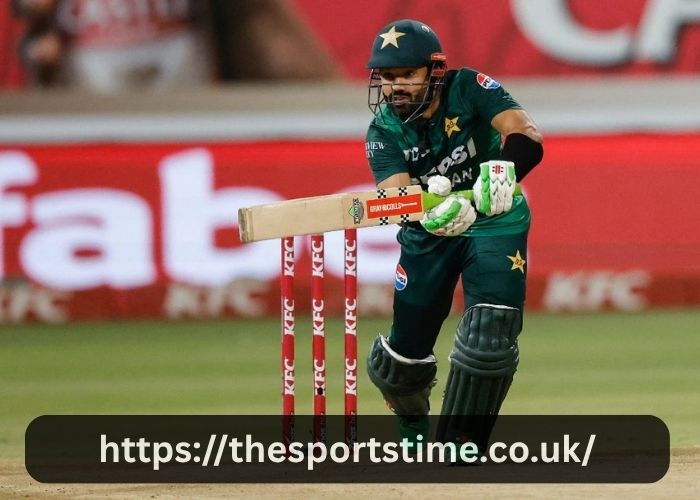
Pakistan-South Africa cricket rivalry has produced some unforgettable Test matches, nail-biting ODI series, and intense tournament duels. Both sides are known for their aggressive playing styles, powerful bowling attacks, and gifted batsmen who can change games singlehandedly.
Over decades, this rivalry has given cricket fans thrills and iconic memories they will always treasure. This South Africa National Cricket Team Vs Pakistan National Cricket Team Timeline highlights key moments, milestones, and changes that have shaped this rivalry.
| Date | Match | Venue | Result | Format |
|---|---|---|---|---|
| 08 Nov 2025 | 3rd ODI | Faisalabad | Pakistan won by 7 wickets | ODI |
| 06 Nov 2025 | 2nd ODI | Faisalabad | South Africa won by 8 wickets | ODI |
| 04 Nov 2025 | 1st ODI | Faisalabad | Pakistan won by 2 wickets | ODI |
| 20 Oct 2025 | 2nd Test | Rawalpindi | South Africa won by 8 wickets | Test |
| 12 Oct 2025 | 1st Test | Lahore | Pakistan won by 93 runs | Test |
The early 1990s
The South Africa national cricket team is a professional cricket squad representing its country in men’s international cricket.
It is administered by Cricket South Africa and fully members of the International Cricket Council; often referred to as ‘Proteas’ after South Africa’s national flower, Protea cynaroides; its longstanding rivalry with Pakistan has produced some thrilling tournament matches over time.
The Proteas are well-renowned for their tactical approach to limited-overs cricket, aggressive batting, and athletic fielding.
Their rivalry with South Africa has produced some of the most exciting Test series, pulsating ODI matches and high-scoring T20Is; even as modern cricket becomes ever more complex this rivalry remains compelling for fans.
South Africa made its first debut in first-class and international cricket during the 1888-89 season, struggling against Australia and England but making steady progress against them. By the first decade of the 20th century they had begun fielding competitive teams that regularly toured throughout the globe.
Early 1990s saw South Africa emerge as a powerful ODI side with Allan Donald, Shaun Pollock, and Jacques Kallis at its core. Over 17 ODI matches they won 11 out of 17, yet were unable to advance further than losing in 1996’s quarter-final against India before failing to qualify for 1999’s final matchups.
South Africa was still one of the dominant teams in One Day International Cricket during this period, boasting strong batting depth and fielding acumen that made them formidable opponents for any opponent they faced.
After an inauspicious start, South Africa’s Proteas made a comeback during the latter half of summer’s ODI series against India. Players like Quinton de Kock, Hashim Amla and AB de Villiers made significant contributions, becoming South Africa’s first trio with seven or more ODI centuries between them.
The early 2000s
South Africa and Pakistan have built up an intense rivalry that spans decades, featuring world-class players and thrilling tournament matches.
South Africa have always been formidable opponents, particularly the Proteas with their incredible pace attack, organised batting line-up and sharp fielding; making them one of the most consistent international cricket teams.
During this time, South Africa’s record against Pakistan was varied, as both sides engaged in some gripping Test matches and regularly contesting competitive ODI and Twenty20 series against one another. At times however, their attacking batting tactics and tactical game plan enabled them to secure many crucial victories over Pakistan.
Early 2000s Proteas performances in limited-overs cricket were among their finest, featuring a blend of young fast bowlers and experienced batsmen, along with home conditions being leveraged via quick bowlers and solid batting lineup. While their results in ODI and T20 competitions varied significantly, they remained one of the premier international teams.
Proteas struggled despite their relative success in ODIs and T20 to maintain momentum in Test cricket. Performances at the ICC Cricket World Cup, in which they finished in four semi-finals were below expectations; also their batting depth was called into question during this period; often criticised was also their absence of a “fifth bowler”.
South Africa made their return to Test cricket against India at Calcutta in 1991, where Hansie Cronje proved an unshakeable leader despite losing.
Before the Test he held a meeting with his team to consider Mohinder Amarnath’s offer of spot-fixing; though ultimately this offer was declined; nonetheless it demonstrated how confident and strong Cronje was as captain.
In that same year, the Proteas began their rapid improvement in Test cricket, winning their inaugural ODI series against India in Delhi. This match was notable for the debut of Herbie Taylor – who would go on to become one of cricket’s premier batsmen; Schwarz, White and Vogler bid farewell to international cricket with this series victory.
The late 2010s
Pakistan and South Africa have engaged in some thrilling bilateral series, tournament duels and T20 matches since 2010. Their rivalry is unparalleled due to the clash of styles between Pakistan’s unpredictable pace-spin attack versus South Africa’s regimented approach and big-hitting big hitters; producing some memorable World Cup moments and tight finishes.
Both teams have shown significant advances in white-ball cricket, too. Recent ODI series have been exciting as Pakistan’s fast bowlers and improved batting depth have ensured tight contests. Meanwhile, T20 format provides an exciting platform for explosive openers to compete, dramatic death-over situations to develop, and new heroes to emerge.
Quinton de Kock joined an elite club of players when he reached 7,000 ODI runs against Pakistan during Abu Dhabi Test 1. De Kock joined South African greats AB de Villiers and Jacques Kallis as well as former captain Faf du Plessis to reach this mark in Abu Dhabi – Proteas ultimately went on to win series 3-0 thanks to their dominating performance there.
The early 2020s
South Africa’s national cricket team represents its Republic in international cricket competition, administered by Cricket South Africa. Since 1889 when international play began with three other nations (and later five! ),
South Africa’s Proteas have experienced many ups and downs before achieving regular victories over opposition players; first Test win achieved in 1906 before regular victories were registered until mid to late 1960s when legends such as Graeme Pollock, Eddie Barlow Mike Procter and Ali Bacher showed their talents for their country!
Apartheid was finally put to an end in 1991, and South Africa went on to host a Cricket World Cup, yet continued their tradition of failing under pressure in high-stake matches and often failing at reaching semi-finals of both tournaments – both times losing both times against India.
However, the current generation of players have shown great promise for the future and a strong pipeline of talent has ensured that South African cricket once more stands as a serious contender across all formats of cricket.
Even though recent failures on big stages were met with harsh criticism by Hashim Amla assuring fans that mentality hadn’t altered and they will learn from mistakes made along the way.
South Africa will seek to regain their standing as one of the premier teams when they launch their 2023-25 tour against Australia. This tour marks AB de Villiers’ return as captain, joined by Aiden Markram as ODI skipper and Shukri Conrad as all-formats coach.
South African pace attacks and well-organised batting lines, supported by accurate fielding are an unstoppable force – proven in bilateral tours as title favourites; now becoming title favourites at global tournaments as well. Looking ahead at Pakistan series this will prove no exception to that statement!
Related Post
Bangladesh National Cricket Team Vs India National Cricket Team Matches
India and Bangladesh national cricket team matches are among the most intense and thrilling in [...]
Lucknow Super Giants vs Mumbai Indians Match Scorecard
Mumbai Indians and Lucknow Super Giants will square off for an IPL 2025 match at [...]