India National Cricket Team Vs England Cricket Team Timeline
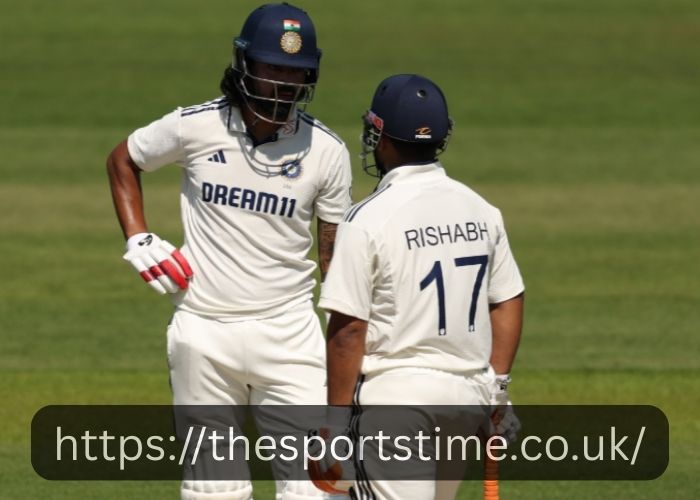
India and England national cricket teams’ matches are always full of history, passion and excitement. The India National Cricket Team Vs England Cricket Team Timeline reflects how, from early Test match attrition to the rise of T20 cricket, this rivalry has elevated both teams to greatness.
Ben Stokes and Sachin Tendulkar’s magnificent innings and unfaltering work have created many remarkable moments during this long history of cricket. As both teams foster new talent and adapt to an ever-evolving sport, future matches promise more exciting contests.
| Date | Format | Match Details | Result |
|---|---|---|---|
| 2 Feb 2025 | T20I (5th T20) | India vs England – Eden Gardens, Kolkata | India won by 5 wickets (India clinched series 4-1) (TV9 Bharatvarsh) |
| 31 Jan 2025 | T20I (4th T20) | India vs England – Pune | India won by 15 runs (TV9 Bharatvarsh) |
| 28 Jan 2025 | T20I (3rd T20) | India vs England – Rajkot | England won by 6 wickets (cricketiest.com) |
| 26 Jan 2025 | T20I (2nd T20) | India vs England – Kochi | India won by 4 runs (cricketiest.com) |
| 20 Jun – 31 Jul 2025 | Test Series (1st–5th Tests) | 2025 India tour of England (Anderson-Tendulkar Trophy)* | Series drawn 2-21st Test: England won by 5 wickets2nd Test: India won by 336 runs3rd Test: England won by 22 runs4th Test: Drawn5th Test: India won by 6 runs (cricketiest.com) |
1932
India has long been one of the world’s top teams since it first emerged in the late 19th century. More recently, their teams have proven especially formidable both in Tests and One Day Internationals under Mahendra Singh Dhoni as captain; both formats having seen them achieve multiple successes under his guidance and cementing India as global powerhouses.
Indian cricket made its official Test debut during its tour to England in 1932, playing its inaugural Test match at Lord’s under the leadership of CK Nayudu.
Though India hadn’t achieved independence yet, the team performed strongly with Mohammad Nissar taking 5-93 and giving rise to full test status for Indian cricket.
Following this success, India’s performance steadily improved throughout the 1960s and early 1970s. By winning regular series against England during this era – most significantly against England – their performances reached new heights; 1971 marked a watershed moment when they defeated them five matches to one. This victory marked a turning point in India’s cricketing history as well as heralding an era of dominance both tests and one day internationals (ODI).
Over the years, India and England have developed an intriguing rivalry. Both teams have met repeatedly in tight matches that often saw some of the game’s key moments – such as Sachin Tendulkar scoring his maiden test century against them at Old Trafford and going on to score 1,575 runs against them during his career; then there are battles between India’s star batsmen such as Virat Kohli versus England’s finest bowlers such as James Anderson’s incredible duels against Virat Kohli at Old Trafford in 1990 which witnessed him scoring his maiden test century against them in 1990!
India-England rivalry is an epic tale that continues to inspire future generations of both players. Tradition meets transformation, history fuels modern fire. As cricket progresses into new formats and formats change, this legendary rivalry will likely play a vital role. As cricket evolves through time, India-England rivalry will only remain more integral part of its legacy and history.
1971
One momentous occasion in Indian cricket history was their triumphant first Test win in England on August 24th 1971; yet to understand its significance it’s necessary to travel back further in time. To understand what exactly was at stake with that win, one must go further back.
Up until this point, Indian teams had had an inauspicious record in England; losing 15 of 19 attempts. But Ajit Wadekar’s side that arrived in June 1971 under their captaincy radiated confidence thanks to having defeated West Indies in the Caribbean series with Sunil Gavaskar scoring 774 runs and making headlines around the globe with his performance.
India was never considered the top team in the world despite these positives; this was especially evident when they faced England under Ray Illingworth who had just won back the Ashes from Australia the winter prior. England boasted a formidable combination of experience and youth players that proved formidable opponents for India.
But India were equipped with some new weapons in their arsenal: Bishen Singh Bedi, Srinivas Venkataraghavan and Chandrasekhar had formed an effective spin trio during their Caribbean series victory; they would likely play an essential role in India’s chances against England as well.
On day one of The Oval Test at Lord’s, India gained an initial innings advantage thanks to Bedi and Chandrasekhar. On day two, England struggled mightily but were saved from complete embarrassment thanks to rain.
India took control of the match early, thanks to Chandrasekhar’s bowling. His career-best figures of 9 for 93 were instrumental in their victory – their first victory ever in England! This win would define their cricket future and mark it as an historical milestone.
1983
The India National Cricket Team is a professional team representing India in international cricket. It is administered by the Board of Control for Cricket in India (BCCI).
Over its seven-decade long history, India has earned world renown and produced some of its finest players – both on and off the pitch.
India and England have played several memorable cricket World Cup finals over the years, such as 1983 in Lords.
India won this match thanks to an outstanding bowling performance that kept West Indies to just 140 runs over 52 overs – the lowest total successfully defended ever in any World Cup final!
India’s 1983 victory marked a turning point for their side. Over the following years, they became more consistent and won multiple series against English sides.
Furthermore, India also made waves in ODIs by winning the 2005 Indian Oil Cup and reaching several finals; their success in ODIs being built upon developing young talents such as Ravi Shastri and V. S. Laxman.
However, India continued to struggle in Tests. Even though Hussain managed a strong showing at Ashes 2001, he could not stem the decline of the team; with players such as Graham Thorpe and Darren Gough leaving and central contracts being introduced. All these factors combined made an already tenuous position even worse.
After an unsuccessful 2005 season, India finally found their footing in one-day internationals (ODIs), and won the 2007 ICC Cricket World Cup in South Africa. From then onwards their performance steadily improved until eventually reaching the 2010 World Cup final.
Rohit Sharma currently leads India in one-day internationals (ODIs), with Mahendra Singh Dhoni leading tests and T20Is respectively.
Both are mentored by Rahul Dravid who is assisted by Vikram Rathour for batting; Paras Mhambrey for bowling; and T Dilip (fielding). As of 2020, India were ranked first for Tests; second in ODIs; and fourth in T20Is
2025
The India national cricket team is widely considered to be the premier and prestigious cricket team worldwide, administered by the Board of Control for Cricket in India (BCCI).
Affectionately known as “The Men in Blue”, their success can be measured in numerous major tournament wins as well as their massive and passionate fan base known as Swami Army or Bharat Army which represents India’s strength and unity.
India and England’s longstanding cricket rivalry has given rise to some of the most iconic moments in cricket history.
From changing styles, new heroes and unyielding competitive spirit; over four decades have passed as this classic feud has changed from Test match attrition to T20s; each match adds another chapter that keeps fans guessing until its conclusion.
Few matches capture the essence of India-England rivalry as vividly as Lord’s 2002 NatWest Series final. England were trailing by 146/5 when Yuvraj Singh and Mohammad Kaif struck up an incredible partnership that turned the tide and secured India a convincing win – highlighted by Sourav Ganguly’s shirtless celebration on Lord’s balcony – a pointed response to Andrew Flintoff’s shirtless antics at Mumbai several months earlier.
Since then, the rivalry has continued to evolve through the introduction of new heroes: Sachin Tendulkar, Rahul Dravid, and Virat Kohli have all made waves in England, often rising to tough pitches with gusto. Kohli’s Test match duel with James Anderson has provided some unforgettable moments throughout history.
India has enjoyed an impressive rise to power in ODI cricket over recent years. They have established themselves as one of the premier teams, even surpassing Australia’s impressive 1980s team in this format. T20 performances have also increased dramatically; India now rank amongst the best T20 sides worldwide. Yet despite these impressive results, India still have much room for improvement both Tests and ODI formats.
Related Post
West Indies Cricket Team Vs Pakistan National Cricket Team Match Scorecard
The West Indies cricket team and Pakistan national cricket team rivalry has produced memorable Test [...]
Punjab Kings Vs Rajasthan Royals Match Scorecard
An exhilarating match that showcased why RR and PBKS are such fierce rivals. Nehal Wadhera [...]